Wednesday, 23 November 2011

21/11/11 - Time Project

Another week, another project! Now to explore the use of time in photography. That can range be from shutter speed, to taking a picture of a clock. The point of this experiment is to use a digital camera, but what it is, is down to us.. so mobile phones, web-cams, point and shoot cameras, DSLR's etc! You may think suggestions of mobile phones is ridiculous, but then there's the challenge of understanding that cameras limitations and working with it, to create something you're proud of! 

In class we watched a clip of 'A Picture of Britain' another BBC documentary, this episode was  'The Midlands' and included the artists:


They had a task to take pictures using a mobile phone with a 2mp camera, a basic point and shoot digital camera, and a medium format digital Hasselblad. Each had one of the cameras, and to see how they came to grips with it and learn how to work with what they had was quite interesting!

So ideas at the moment?!?! Well, i did think about doing something with the camera obscura again, possibly filming it? Maybe use my webcam to photograph it? But not sure if that'll work in the dark or if theres a way around it... Will have to explore further!


One thing i did find was this extract from Mary Warner Marien's book, Photography: A Cultural History which explains a little where photography and the obscura originated :)


Sources:

'A Picture of Britain: The midlands'. 2006 [TV]. BBC4. 25 April. 20:30

Warner Marien, Mary. Photography: A Cultural History, page 6. 2010. (3rd edition.) London, Laurence King.

Tuesday, 22 November 2011

14/11/11 - Cibachrome Process

Last week I saw Tim Heads 'Toxic Lagoon' in the V&A, and I’ve decided to use this as the basis my 'Processes' Project. The project is to find a photographic image, and research the process in which its created. This piece is a 'Dye Destruction Print' which i had never come across before, and was confused why 'destruction' would be involved! This inspired me to go and find out more about it. It's known as Ilfochrome, (aka Cibachrome). People use this process to get strong vibrant colours in their work, which is true of Heads piece. “Cibachrome dyes have very good spectrophotometric characteristics meaning they yield images with excellent colour saturation and hue rendition.” (Krause, Peter 1982) Also it’s used for archival type images as it doesn't fade.

It’s a polyester based material that’s made up of layers of emulsion, with some of those layers saturated in dyes and chemicals that are sensitive to certain colours, then when exposed, they record the colour details. The material is then bleached which destroys the dyes (hence the name) but reveals the image.

 Cibachrome image - taken from  Esme Perry-Trueheart's essay.
So I was to put together an A3 page that included descriptions about the image, process and context. We each had the same template to follow so when hung in the gallery they looked really good.
My Piece on Tim Heads Toxic Lagoon


Sources:


Krause, Peter and H. Shull, 1982. Complete Guide to Cibachrome Printing. Michigan: H.P. Books


Friday, 18 November 2011

7/11/11 - Southampton & Processes Project


This week some members of the course were in Southampton, and some Paris. I stayed in Southampton but went to London to visit Tate Modern and V&A Museum. It’s such a satisfying experience seeing the work of photographers first hand. The reason for my visit was to find an image to base my processes project on. In the Tate, I saw Luc Delahaye’s work which was beautiful and detailed. One piece in particular was ‘The Palestine Hotel, 2003’
Own photo of the piece in the Gallery.
 Taken in large format, his works are a wonderfully focused image of a scene that is normally captured on small digital cameras that can rapidly take, delete, re-shoot and so on.


Later on in the afternoon at the V&A museum saw an image by Harold Edgerton called  ‘Milk Drop Coronet’ which was created in 1957, a c-type print. The image was 45x34.5cm, and seemed small compared to the prints I had seen earlier on in the day. However, its strong red vibrancy stood out against the surrounding pictures. I learnt that Edgerton used a stroboscope to light and capture the split second moment of the splash. 

Milk Drop Coronet - taken from V&A website

Finally, another image i noticed in the V&A was Tim Heads 'Toxic Lagoon' with its vivid colours and interesting patterns and shapes. Head's work reflects ideas of pollution and human relationships with the environment. The way we mass produce artificially and create our own un-natural materials is depicted through his collection of synthetic materials in this piece.
'Toxic Lagoon' scanned in from Photography: A Cultural History.
Sources:

http://www.vam.ac.uk/vastatic/microsites/photography/photographer.php?photographerid=ph019&row=4


Warner Marien, Mary. Photography: A Cultural History, page 460. 2010 (3rd edition) London, Laurence King.
31/10/11 – Narrative & Processes


What is Narrative? We all know the obvious beginning, middle and end but what about in terms of an image?

  • Structure/content/form
  •       Photo as an essay
  •       Alterations change the narrative, i.e. cropping.
  •       Does that mislead and manipulated?
  •       Text with image sets background, true or not.


Processes….
We then discussed the processes images go through to be made, as this is what our next task is about. We’re to find an image and investigate how it was made, along with text that explores the process.

We watched a video that involved the early days of photography and how people such as Fox Talbot and Louis Daguerre made their images. I was so intrigued by the Daguerreotype and really want to look into this.
 "Daguerreotype: Photographic image made by the process launched by Louis Daguerre in France in 1839. Its a positive image on a metal plate with mirror-like silvered surface, characterised by very fine detail. Each one is unique and fragile and needs to be protected by a padded case. It became the dominant portrait mode for the first deacades of photography, especially in the US." (Liz Wells 2009 p.50)

Part of the film was about camera obscuras and while quietly sitting, my mind sparked at the idea of reversal of images and think this might be a really interesting idea to look at. So I went and bought some black card and tape from my local craft store and turned my room into a camera obscura...
the world inside my room!

The road outside projected onto my ceiling.


The set up.
Found the clip of film about camera obscuras on youtube, it's from a BBC Documentary series called 'Genius of Photography' check it out!  


http://www.youtube.com/watch?v=QHPv9-Uu6ug&feature=related


Sources
Liz Wells, 2009,  Photogrpahy, a critical introduction, Fourth Edition. Oxon, Routledge


Real Big Camera Obscura, 2009. [online video] [viewed 31/10/11] Available from: http://www.youtube.com/watch?v=QHPv9-Uu6ug&feature=related


24/10/11 – Digital Suite Part 2


 I needed to make an A3 print to hang in the gallery, I had a selection of my ‘scanner art’ images that I liked, but they were made on my A4 scanner and I didn’t want them to lose detail when printed large. To avoid this I decided to put two images together on one page. I wanted 2 that weren’t too similar, but had a connected theme. I chose these 2:


Light, white, fresh & clean - Summer Scan 
Cold, distant, dark, spooky - Autumnal Scan

I had to think about the layout the images on the A3 page, and I decided to keep it portrait and have one above the other, as next to each other they looked like 1 long image.

After hanging the work in the gallery, we discussed each others work in a group. I found this insightful, as infact people didn’t perceive the message I was portraying about weather, a lot of people suggested dreams and floating. This made me think about Stuart Halls essay 'Encoding/Decoding' (1993) and his idea about how everyone will perceive things differently due to their cultural backgrounds, life styles, gender etc. This made me think I need to be more careful about how i want my work to come across, be sure I’m sending out the right message i want. Another way that images are perceived differently, incorrectly is where they are published.
"What a photograph can mean changes as it moves through different contexts: the message conveyed by a picture made for a newspaper or an agency report is informed by the publication in which it runs, where it is reprinted, reposted, recaptioned, positioned alongside other images, and thereby reconstructed." (Leo Hsu 2010)
note- clear pins for hanging so not to distract from image.


My summery image actually really reminded me of the shoot for the September 2011 cover for Elle UK of Kirstin Dunst, photographed by David Slijper.


Sources


Hall, Stuart. 2009. 'Encoding/Decoding'. in S. Durring (ed.) The cultural studies Reader. London: Routledge.


Elle UK Magazine, 2011. Elle: Cover Page. September.


Hsu, Leo. 2010. Photo Contests/Photo Contexts. Foto8.com [online]
http://www.foto8.com/new/online/blog/1135-notes-on-photo-contests-as-contexts.


17/10/11 – Photography without a camera?!


I made an image using just an A3 scanner in uni today, I have touched on this type of work before, but it’s something that really catches my imagination - to make images with out a camera. I really like the vivid colours it captures and the way the focus fades on 3D objects as they curve out the way of the light source.
envelope, jewellery, poster, leaves, string, feathers, ornaments.


I then went back to my room and used my basic A4 scanner to make some images, having been inspired and thought of further ideas. We were asked to base our images on what had over our week, and looking at the objects I had I thought they talked a lot about how autumn has started and almost into the phases of winter. 

I think I’d really like to use this method of work more, I think it’d be really interesting to layer in images that I have taken on film, and also some of the pinhole images.

I looked online at what some other artists had done with scanner art and came across some really interesting stuff:
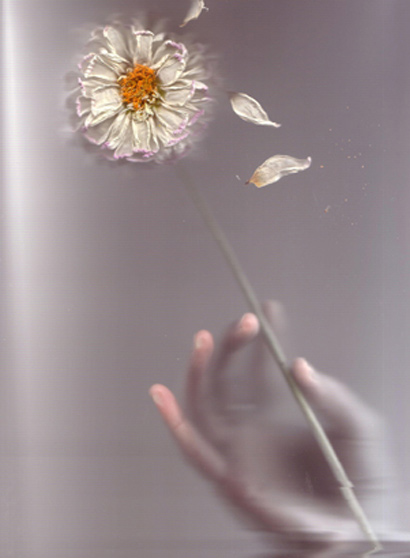
Elena Kropaneva - Listening to a flower.
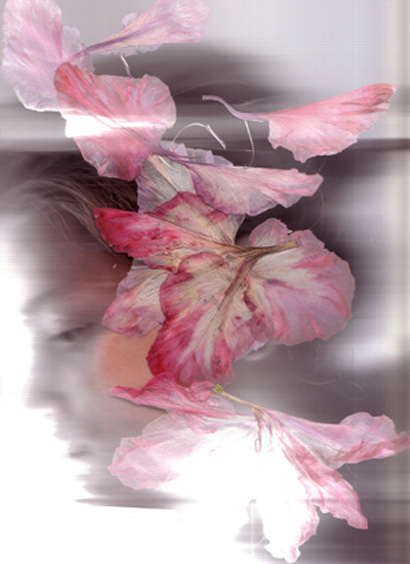
Elena Kropaneva - My Magic

I really like the use of the body in the work, I think it adds a lot to the images and becomes more a portrait that a scanned image. I think this is something I want to experiment with over the week.    

Sources:
http://scannography.org/artists/kropaneva-elena.html

10/10/11 - Pinhole Exhibition


Today we made a gallery with our images that were made with a ‘beer can camera’. I was really excited to get my work up on the wall and be able to stand back and analyse it properly. I had 3 portraits and 1 landscape image that I wanted to use, but as a set they didn’t work together, so I kept it as just the 3 portraits, which looked good once pinned up.
Negatives
Positives
Positive/negative versions of the images.
  • -       Need to change composition, right hand image looks disconnected.
  • -       Need to change pins to plain white, too distracting.

The Gallery


Here you can see others ways of hanging, all fairly different and personal to their images. My set are at eye level, which I think makes sense being portraits, as if you’re face to face with the figure.


I’d like to practice more with the pinhole cameras, as I think the images were interesting but mine need to be sharper and more conceptual – I was focusing too much on getting it to work well and the correct exposure. “What then is the best size of aperture? That is the important question in pin-hole photography” (Lord Rayleigh, 1891) and it’s certainly something I need to work on! I need to think about each detail as “the gadget is nothing but a tool or an instrument like the brush, and everything depends on the vision on the photographer” (MARG 2009) so I need to be sure to direct and control each element, particularly with something as basic as a pinhole camera. I suppose with this kind of thing, it's all practice and thinking about every detail like the weather that day, your position regarding the sun and if you're in shade, etc!

Sources:
Renner, Eric. Pinhole Photography: rediscovering a historic technique. 2000, 2nd edition. Oxford, Focal Press.


MARG Magazine. 2009. Photography as an Art Form. 61 no1 XLVI, Inside Back Cover.